
Six years ago, my body shut down.
Not slowly. Not with warning signs I could have caught if I’d been paying closer attention. One day, I was running at full speed—and then I wasn’t. A rare nerve condition most doctors had never seen. And somewhere in the middle of all of it, they found something else sitting quietly in the center of my brain. A 9mm aneurysm. A clock I hadn’t known was ticking.
I’d spent my whole career helping other people. Coaching, leading, building, speaking. I was good at it. Externally, everything looked like success.
But my body had been keeping score the whole time.
And the bill came due.
Here’s what nobody tells you when your health collapses: the hardest part isn’t the physical pain. It’s the moment you realize that everything you thought was working — wasn’t. That the discipline that got you here won’t get you out of here. That trying harder isn’t a solution. It’s the problem.
I spent those years learning things I should have been taught decades earlier. About the nervous system. About why the body stores what the mind refuses to feel. About why some people read every right book and still can’t change—not because they’re weak, not because they lack willpower, not because they haven’t found the right system yet. But because they’re starting in the wrong place.
You can’t change your life from the neck up.
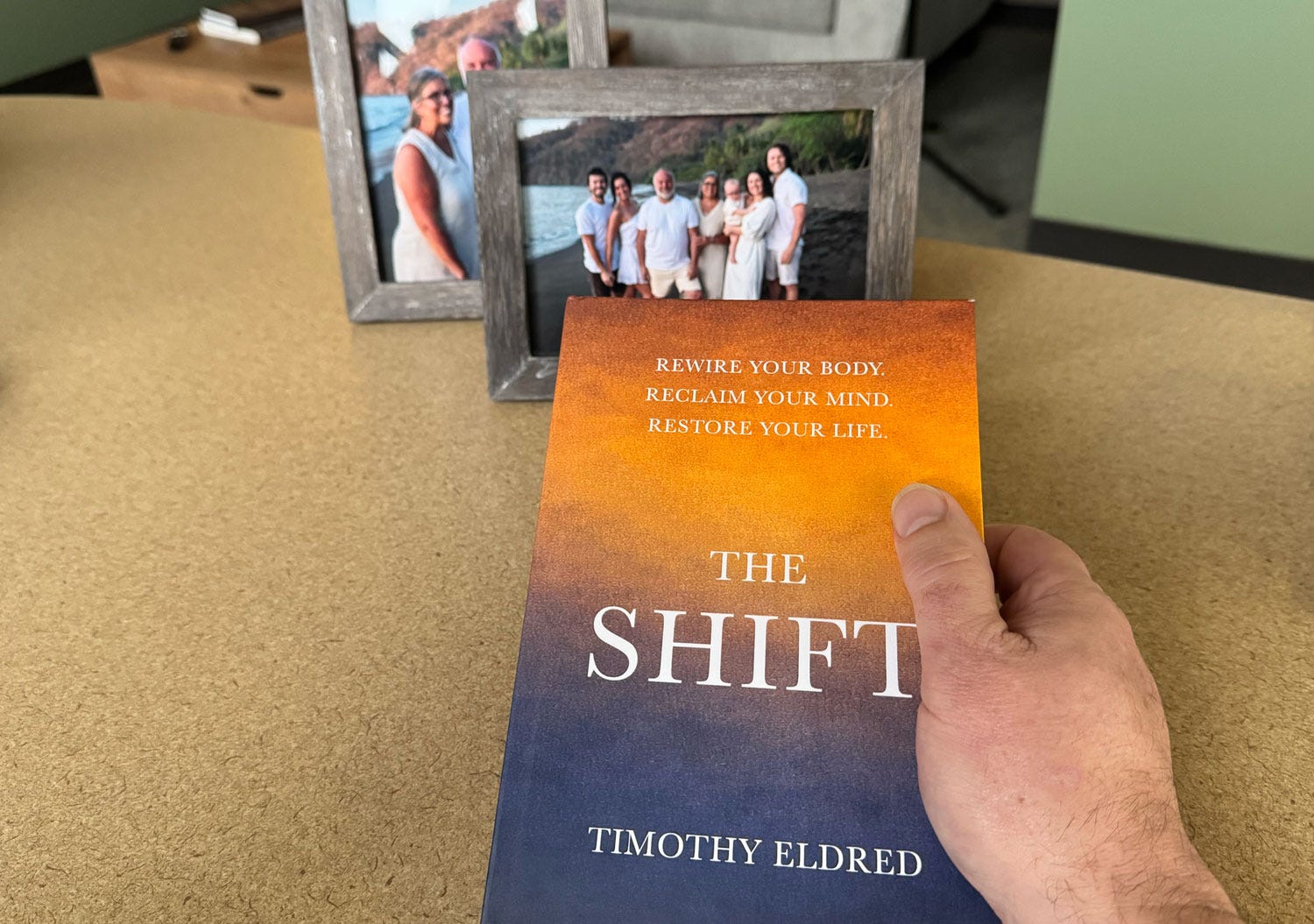
That’s the line the book is built on. And I know how it sounds. It sounds like something you’d find stitched on a pillow. But when you’ve been on your back in a hospital bed running through everything you know and none of it working—it stops being a nice idea and becomes the only thing left that makes sense.
What I found changed everything. Not my circumstances. My life. There’s a difference. And it took me a long time to understand what that difference actually was.
The whole self-help industry is selling you a neck-up solution to a whole-body problem. Better thinking. Better mindset. Better habits. More discipline. More grit. And none of it is wrong exactly—it’s just that you can’t wire in new behavior when your nervous system still thinks it’s in danger. You can’t rewrite the story when the body won’t let you out of survival mode long enough to pick up a pen.
That’s why I wrote this book.
Not to add another framework to the pile. Not to tell you that you’re doing it wrong. But to show you what was missing—the piece that comes before everything else. The part that actually makes the rest of it possible.
I wrote the book I needed six years ago—and later, when the physical crisis passed, what was left was something quieter and harder to name. Sitting alone at home, drowning in depression, trying to think through a fog that wouldn't lift.
Sunday, you get to read it.
Four days.
—Tim

